

Description
The Core Arrangement Challenge
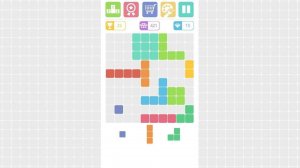
At the heart of Crystal Grid Logic lies a straightforward yet deep concept: players position a series of colored tiles onto a 7x7 board. The objective is to complete entire rows or columns, which then vanish and award points. What makes this process compelling is the need to consider each tile's placement carefully. A single misaligned tile can block future moves, so every decision carries weight. The game does not allow for random placement; instead, it rewards those who think several steps ahead. As the board fills, the challenge becomes a delicate balance between clearing space and setting up larger cascading clears.
Pacing and Pressure Dynamics
One of the defining features of Crystal Grid Logic is its adaptive speed. The game starts at a relaxed tempo, giving newcomers time to understand the mechanics. However, as players successfully clear lines, the rate at which new tiles appear increases. This gradual acceleration creates a natural difficulty curve that keeps the experience fresh. Beginners can focus on learning patterns during the early stages, while experienced players face a true test of their ability to process information quickly. The pressure never feels unfair; it builds logically based on the player's own progress.
Visual Feedback and Interface Design
The game presents its tiles with bright, distinct colors that make them easy to differentiate at a glance. Each tile features a subtle pattern, adding visual variety without causing confusion. When a row or column is completed, a brief animation plays, providing satisfying feedback. The interface remains uncluttered, with the score and a progress indicator displayed neatly at the top of the screen. Controls are responsive, whether using a mouse on a computer or tapping on a mobile device. This clean design ensures that players can focus entirely on the puzzle in front of them.
Strategic Depth for Repeat Play
While the basic rule of completing lines is simple, Crystal Grid Logic offers considerable strategic depth. Players quickly learn that clearing lines near the bottom of the grid is often more effective, as it prevents the board from becoming too full. Another key strategy involves setting up multiple near-complete lines simultaneously, allowing for chain reactions when a single tile completes several lines at once. The game does not explicitly teach these tactics, encouraging players to discover them through experimentation. This layer of hidden strategy gives the game high replay value, as each session presents a new puzzle to solve.
Suitability for Different Age Groups
Crystal Grid Logic is designed to be accessible to a wide audience. Its core mechanics are easy to grasp, making it suitable for younger players who are developing their logic skills. At the same time, the increasing speed and strategic elements provide a meaningful challenge for adults. There is no violent content or complex narrative, allowing the game to serve as a quick mental break during a busy day. Parents can feel comfortable letting children play, knowing the experience is purely about pattern recognition and planning. The game fits well into short play sessions, but its addictive nature often leads to longer playtimes.





Player Comments
Sign in to comment
You must be logged in before posting a review or rating.
No account? Create one
No comments yet. Be the first to comment!