
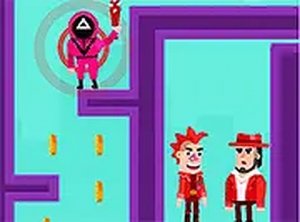
Description
Drawing as a Puzzle Tool
In Sketch Logic Challenge, the primary interaction is drawing. Players use their mouse or touchscreen to sketch lines, shapes, and objects directly into the game world. These drawn elements become physical objects that interact with the environment according to basic physics rules. A simple line can become a ramp, a bridge, or a lever. The game does not prescribe what to draw; it presents a situation and asks the player to invent a solution. This open-ended approach encourages experimentation, as there are often multiple ways to achieve the goal. The satisfaction comes from seeing your creation work as intended, or from learning why it didn't and trying again.
Level Design and Progression
Each stage in Sketch Logic Challenge introduces a new scenario with its own set of obstacles and objectives. Early levels serve as tutorials, teaching the core mechanics with simple tasks. Later stages combine multiple elements, requiring more complex drawn solutions. The difficulty curve is gentle but consistent, ensuring players build confidence before facing tougher puzzles. The game does not rely on time pressure, allowing players to think at their own pace. This design makes it accessible to a wide audience, from children to adults, and from casual players to puzzle enthusiasts. The variety in level layouts keeps the experience fresh, as no two puzzles feel identical.
Visual Style and User Experience
The game features a clean, minimalist visual style that focuses attention on the puzzle itself. Colors are used to highlight interactive elements and to indicate the character's path. The interface is intuitive, with clear icons for drawing, erasing, and restarting a level. Full-screen mode is available for an immersive experience on desktop monitors, while the mobile-friendly design ensures touch controls are responsive and precise. The game runs smoothly in any modern browser without plugins, making it instantly accessible. Sound effects are subtle and non-intrusive, providing feedback for actions like drawing or collecting items without distracting from the puzzle-solving process.
Reward System and Tool Upgrades
As players progress, they collect rewards by completing objectives and gathering items scattered throughout each level. These rewards can be used to upgrade the drawing tools, making them more effective for solving advanced puzzles. Upgrades might include increasing the maximum length of a drawn line, adding more drawing colors, or unlocking special shapes. This progression system gives players a sense of achievement and provides tangible benefits for mastering earlier stages. It also adds a strategic layer: deciding which upgrades to prioritize based on the challenges ahead. The upgrade system is designed to be fair, with rewards earned through effort rather than through microtransactions, keeping the experience purely skill-based.



Player Comments
Sign in to comment
You must be logged in before posting a review or rating.
No account? Create one
No comments yet. Be the first to comment!